



15 Buffet Station Organisation Ideas for High-End Hospitality Venues

A premium buffet is not merely a service line; it is a meticulously engineered piece of performance art where guest psychology meets culinary excellence. You likely understand the frustration of watching a sophisticated menu lose its lustre due to congested guest traffic or a cluttered presentation that feels more like a canteen than a five-star venue. When limited table space leads to a cramped display or food cools down too quickly, the prestige of your brand is at stake.
Discover how to transform your service from a simple meal into a high-performance, visually stunning guest experience using professional buffet station organization ideas. By mastering the intersection of functionality and aesthetic excellence, you can achieve faster guest throughput and significantly reduced food waste. This guide provides a curated preview of 15 transformative strategies, ranging from the multi-level versatility of SkyRize risers to the streamlined efficiency of the Modulite™ system. We will show you how to create an organised, Instagrammable, and hygienic environment that establishes immediate credibility with every guest who approaches the table.
Key Takeaways
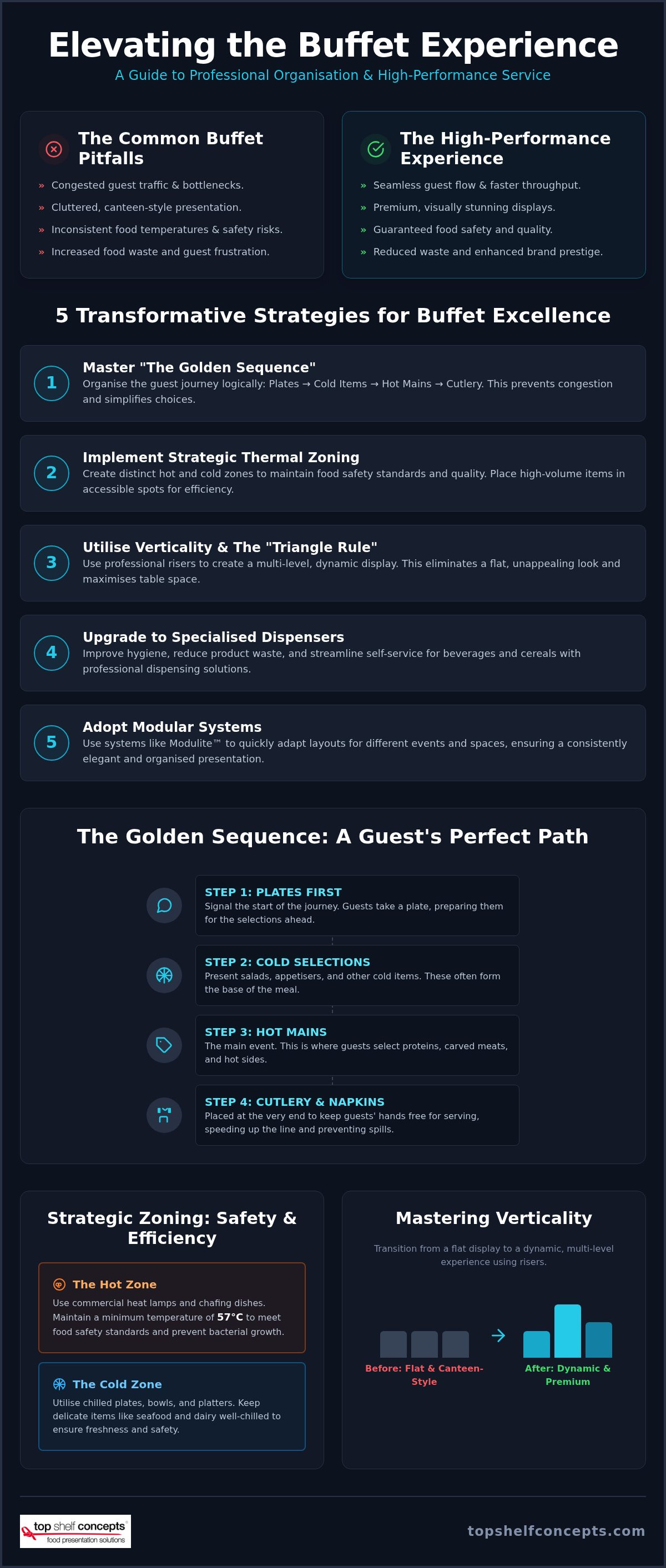
- Master "The Golden Sequence" to ensure guest flow follows a logical path from plates to cutlery, preventing congestion and confusion at the start of the line.
- Implement strategic buffet station organisation ideas such as thermal zoning to maintain food safety and keep high-volume items easily accessible for faster throughput.
- Utilise verticality and the "Triangle Rule" with professional risers to eliminate a flat, canteen-style appearance and create a premium, multi-level visual experience.
- Upgrade to specialised beverage and cereal dispensers to improve hygiene standards and streamline self-service while reducing product waste.
- Adopt modular systems like Modulite™ to quickly adapt your layout to varying event sizes and room configurations without compromising on style or elegance.
The Fundamentals of Professional Buffet Station Organisation
Professional buffet organisation is the strategic arrangement of food, equipment, and guest paths to create a high-performance environment. It's an engineering feat that balances operational efficiency with visual allure. Understanding the history of the buffet reveals that successful service has always relied on a sense of order; however, modern high-end venues must go beyond basic placement to curate a truly premium experience. Implementing sophisticated buffet station organization ideas requires a deep understanding of how guests interact with the physical space.
Industry leaders rely on "The Golden Sequence" to dictate the flow of service. This standard dictates a logical progression: plates first, followed by cold selections, hot mains, and finally cutlery. Starting with plates signals the beginning of the journey, while placing cutlery at the end ensures guests don't have to juggle forks and knives while trying to serve themselves. This logical order reduces cognitive load for the guest, allowing them to focus on the quality of the cuisine rather than the logistics of the line.
A well-organised display has a profound psychological impact on guest satisfaction. When a station feels cluttered, guests perceive the food as lower quality and the service as chaotic. Conversely, a structured layout exudes "quiet luxury" and reassures diners of your hygiene standards. To achieve this, professionals focus on "The Service Footprint"; this concept involves maximising every square centimetre of table space without creating a sense of crowding. It's about finding the perfect equilibrium between abundance and precision.
The Guest Journey: Organising for Traffic Flow
Service flow is the seamless movement of guests through a venue. To maintain this flow, you must identify and eliminate potential bottlenecks before service begins. One of the most effective buffet station organization ideas is to physically separate beverage stations from the primary food line. This prevents guests who only want a quick refill from obstructing those who are carefully selecting their meal. Additionally, placing napkins and cutlery at the very end of the service line keeps guests' hands free for serving utensils, which speeds up throughput and reduces the risk of accidental spills.
Hospitality Supplies: The Tools of Organisation
The success of your layout is dictated by the quality and consistency of your equipment. Sourcing the right hospitality supplies is essential for maintaining a cohesive aesthetic. For instance, using consistent plate sizing prevents the "canteen" look and ensures that portions remain controlled across the line. Professional-grade materials, such as premium melamine and porcelain, are vital for busy Australian venues. These materials offer the sophisticated appearance of natural stone or timber but provide the durability required to withstand high-traffic environments without chipping or staining.
Strategic Zoning: Organising for Efficiency and Food Safety
Effective buffet station organization ideas begin with the strict separation of thermal environments. This isn't just about aesthetics; it's a critical component of food safety. By establishing a clear divide between the 'Hot Zone' and 'Cold Zone', you ensure that delicate seafood remains chilled while roasted proteins stay at the required temperature. According to 2026 food safety standards, hot holding equipment must maintain at least 57 degrees Celsius to prevent bacterial growth. Modularity is your greatest asset here. It allows you to pivot your layout seamlessly from a chilled continental breakfast to a hot roast dinner service without redesigning the entire floor plan.
Efficiency is also driven by consumption speed. High-volume items, such as seasonal salads or artisan breads, should occupy the most accessible spots on the line. Placing these at the start allows guests to fill the bulk of their plates quickly, which naturally thins out the crowd before they reach the slower carving stations or premium seafood platters. Implementing these buffet station organization ideas ensures that every guest enjoys a fluid, unhurried experience. Clear signage and allergen labelling are equally vital. In a professional setup, every dish should be clearly marked to help guests make informed choices, which reduces the time spent asking staff questions and keeps the line moving.
Heat Management in the Buffet Line
Integrating commercial heat lamps into your organisational grid is essential for maintaining both temperature and visual appeal. Proper lamp height and spacing are non-negotiable. If lamps are too high, heat dissipates; too low, and you risk drying out the produce. Carving stations should be organised as standalone islands whenever possible. This prevents the inevitable queue for a roast from blocking access to side dishes or vegetable accompaniments. Explore our range of buffet display solutions to see how zoning can be simplified.
Organising the "Messy" Items
Nothing ruins a premium aesthetic faster than sauce drips and scattered garnishes. Manage condiment stations with dedicated holders to prevent spills and keep the presentation tight. Group sauces and dressings specifically with their corresponding protein zones so guests don't have to wander back and forth. Using discreet drip trays beneath ladles will keep the buffet looking pristine throughout the arvo, even during peak service periods. This attention to detail reflects a level of care that guests at high-end venues expect as a standard.
Verticality and Depth: Using Risers to Maximise Space
A flat buffet table often lacks the visual drama required for high-end hospitality; it risks looking more like a school canteen than a curated dining experience. Incorporating verticality is one of the most effective buffet station organization ideas to instantly elevate the perceived value of your menu. Height adds a sense of abundance and sophistication, drawing the guest's eye across the entire display rather than letting it settle on a single plane. By using levels, you create a dynamic environment that feels intentional and luxurious.
Professional curators use the "Triangle Rule" to organise these levels. This involves placing the tallest items at the back or centre to form a peak, with shorter platters tapering down towards the guest. This structure creates natural focal points and ensures that every dish is visible from a distance. Smaller, delicate items like canapes or intricate desserts should occupy the highest levels. This placement increases their visibility and protects them from being overshadowed by larger, bulkier mains. Additionally, vertical displays create valuable "under-riser" space. This area can be utilised for storing extra stacks of porcelain plates or for adding subtle decor that reinforces your venue's theme.
SkyRize Risers: The Gold Standard for Verticality
SkyRize display risers are specifically engineered to facilitate rapid reconfiguration. These lightweight, stackable systems allow catering teams to build complex "food landscapes" in minutes. Because they are easy to move, your staff can adjust the layout mid-service if certain items need more prominence. This flexibility is a cornerstone of smart buffet station organisation, as it allows you to guide the guest's eye toward high-margin items or signature dishes. Using a system that is both durable and aesthetically polished ensures your team remains efficient without sacrificing the venue's upscale atmosphere.
Depth and Layering Techniques
Organising platters from front to back is essential for guest comfort. Always ensure that the most frequently replenished dishes are within easy reach to prevent guests from overstretching across the table. Layering also involves a strategic use of materials to define different food categories. You might use sleek, modern melamine for high-traffic salad sections and classic porcelain for hot mains. For a deeper dive into choosing the right materials for your specific needs, refer to our melamine vs porcelain dinnerware guide. Mixing these textures adds depth to the display, helping guests visually navigate the menu while maintaining a clean, organised look throughout the service.
Self-Service Solutions: Organising Beverages and Cereal
The "Wet Zone" of a buffet requires a distinct organisational logic to prevent spills and congestion. Strategic positioning is the first step; beverage dispensers should ideally be located at the very start or the tail end of the service line. This placement allows guests to grab a drink without interrupting the flow of those selecting food. When developing your buffet station organization ideas, consider the grouping of glassware. Arrange glasses by size and type in clear, logical rows to prevent guests from hunting for the right vessel. Managing waste is equally important in this high-traffic area. Discreet drop-off points for used napkins and stirrers keep the station looking professional and hygienic throughout the service period.
Efficiency in self-service areas also relies on the intuitive placement of accompaniments. If you are serving tea or coffee, ensure that sugar, stirrers, and milk are positioned after the beverage source. This prevents guests from doubling back against the flow of traffic. Small, thoughtful details like these distinguish a high-end venue from a standard dining hall, creating a seamless experience that guests appreciate on a subconscious level.
Beverage Station Optimisation
Choosing the correct drink dispenser is vital for matching your venue's volume and maintaining a premium aesthetic. High-capacity dispensers reduce the need for frequent refills, allowing staff to focus on guest interaction. To elevate the presentation, organise garnishes like lemon slices and fresh mint in chilled condiment holders nearby. This keeps them crisp and prevents the "messy" look of loose fruit on the counter. Integrated drip trays and proactive overflow management are essential for maintaining a clean look, ensuring that small spills don't mar the sophisticated atmosphere of your display. Explore our full range of beverage dispensers to find the perfect fit for your layout.
The Breakfast Buffet: Cereal and Honeycomb
Breakfast service presents unique organisational challenges, particularly regarding space and hygiene. Using vertical cereal dispensers is a proven way to save up to 40% more counter space compared to traditional open bowls. These dispensers also offer superior hygiene standards, as they eliminate the need for shared serving spoons that often fall into the product. For a touch of "quiet luxury," integrate a honeycomb stand as a premium centrepiece. Its natural, architectural form provides a stunning visual anchor while keeping the sticky product contained. Organise milk carafes and dairy alternatives in clearly marked ice baths to ensure they stay at safe temperatures while remaining easily accessible. This methodical approach ensures your morning service is as efficient as it is elegant.
Modular Excellence: The Modulite™ Approach to Organisation
The Modulite™ system represents the pinnacle of modern buffet station organization ideas. It is not just furniture; it's a dynamic tool that allows venue managers to "shape" a room based on specific guest counts and event types. Unlike traditional heavy tables that require multiple staff to move, these modular units feature hidden wheels and intuitive quick-lock mechanisms. This allows a single team member to reconfigure a grand ballroom for a breakfast service into a series of intimate lunch stations in minutes. This level of agility is essential for high-volume venues where fast turnover is a key performance indicator.
Investing in professional equipment provides the foundation for all buffet display success. When your infrastructure is designed for modularity, you eliminate the logistical friction that often leads to cluttered or poorly spaced lines. By choosing a system that prioritises both form and function, you ensure your presentation remains consistent regardless of the room's layout.
Scalability for Different Event Types
The way you organise your tables dictates the movement of your guests. A "U-shape" layout is ideal for directing traffic in a single direction during peak periods, while an "Island" configuration encourages social interaction and allows guests to approach from multiple angles. Modulite™ tables are designed for a linenless aesthetic, which creates a cleaner, more contemporary look and reduces ongoing laundry costs. Beyond the dining room, these systems offer significant ROI through their storage efficiency. Because they are designed to be lightweight and easily disassembled, they keep your storage room as organised as your front-of-house.
Final Checklist for Buffet Organisation
Before the doors open, a final verification of your layout ensures that your strategic planning translates into a flawless guest experience. A pre-service "walk-through" from the guest's perspective is essential for identifying potential bottlenecks or sightline issues that weren't apparent during the initial setup.
Use this quick-fire checklist to ensure your station is ready for service:
- Flow Check: Is the path from plates to cutlery unobstructed and logical?
- Thermal Separation: Are hot zones clearly defined and positioned away from chilled items?
- Accessibility: Are high-volume items in the most reachable positions on the line?
- Hygiene: Are all dispensers full and drip trays positioned correctly to catch spills?
- Signage: Are allergen labels visible and correctly matched to each corresponding dish?
For high-volume venues, having a "reset" plan is just as important as the initial setup. This involves a designated staff member responsible for clearing spills, replenishing napkins, and ensuring the "Triangle Rule" of verticality remains intact as platters are swapped out. This disciplined approach to buffet station organization ideas ensures that the last guest of the day receives the same premium experience as the first.
Master the Art of the Modern Buffet
Mastering the art of professional presentation requires a shift from simple food service to strategic engineering. We have explored how the Golden Sequence and vertical layering with SkyRize risers can eliminate bottlenecks while elevating your venue's aesthetic. By adopting these buffet station organization ideas, you create a high-performance environment where guest flow is intuitive and every dish is showcased with quiet luxury.
Top Shelf Concepts remains Australia's leading hospitality supplier, offering exclusive access to the Modulite™ and SkyRize systems. These professional-grade solutions provide the durability and sophisticated style necessary for the most demanding environments. Elevate your venue with Top Shelf Concepts buffet solutions and ensure your next service is as efficient as it is visually stunning. It's time to move beyond the flat, uninspired line and embrace a modular approach that adapts to your creative vision. Your guests will notice the difference in every detail.
Frequently Asked Questions
How do I stop guests from bunching up at the start of the buffet?
You can prevent guest bunching by separating the plate stack from the first food item by at least 1.5 metres. This gap allows guests to secure their plate without blocking the first dish on the line. Additionally, starting the service with high-volume, fast-moving items like salads or artisan breads thins out the crowd before they reach slower carving stations. Creating distinct islands for popular signature dishes is another effective way to manage traffic flow.
What is the best way to organise cutlery at a buffet station?
The industry standard is to place cutlery and napkins at the very end of the service line. This ensures guests have their hands free to use serving utensils and manage their plates without the risk of dropping forks or knives. Use dedicated condiment holders or partitioned organisers to keep cutlery upright and easy to grab. This small change in buffet station organization ideas significantly improves throughput and reduces the chance of accidental spills.
Should I put the beverage station in the middle of the buffet line?
No, the beverage station should never be placed in the middle of a food line as it creates major bottlenecks. Guests often return for refills; having them push back through a queue of diners selecting food is a recipe for chaos. Position beverage dispensers at the start or end of the journey, or ideally as a standalone island. This allows for independent traffic flow and keeps the "Wet Zone" separate from the "Hot Zone."
How many risers do I need for a standard 2-metre buffet table?
For a standard 2-metre buffet table, we recommend using a set of three to five risers of varying heights to create effective depth. This allows you to implement the "Triangle Rule," placing the tallest SkyRize risers at the back to draw the eye upward. Using different levels ensures that every platter is visible and reachable, preventing a flat, uninspired appearance while maximising every square centimetre of your service footprint.
What are the most hygienic ways to organise self-service cereals?
Vertical cereal dispensers are the most hygienic option for high-end breakfast service. Unlike open bowls with shared spoons, sealed dispensers prevent guests from touching the product or accidentally dropping utensils into the cereal. These systems also protect the contents from airborne contaminants and keep the product fresher for longer. They occupy significantly less counter space, allowing you to organise a wider variety of grains and dairy alternatives in a tidy, professional manner.
Can I use residential furniture for a commercial buffet station?
Residential furniture isn't suitable for commercial environments due to safety and durability concerns. High-end hospitality requires equipment that can withstand constant cleaning, heavy loads, and rapid reconfiguration. Commercial systems like Modulite™ are engineered with food-safe materials and robust locking mechanisms that domestic cabinets simply lack. Using professional-grade equipment ensures you meet food safety standards while maintaining a consistent "quiet luxury" aesthetic that reflects your venue's prestige and reliability.
How do I organise a buffet station for a small venue with limited space?
In small venues, verticality is your best friend. Use multi-level SkyRize systems to stack canapes and desserts, effectively doubling your serving capacity without increasing the table's footprint. Modular tables like the Modulite™ system allow you to "shape" the buffet into a corner or a narrow line to suit the room's specific architecture. This approach to buffet station organization ideas ensures that even the most compact spaces feel spacious, organised, and premium.
Is it better to organise food by course or by flavour profile?
Organising by course is the standard for maintaining a logical guest flow, but grouping by flavour profile within those courses adds a layer of culinary sophistication. For example, keep all Mediterranean-style salads together before transitioning to Asian-inspired entrees. This helps guests build a cohesive plate and makes the menu feel curated rather than random. Regardless of the theme, always maintain the "Golden Sequence" of plates, cold items, hot mains, and cutlery.

