



2026 Food Safety Checklist for Australian Buffets

A world-class buffet is often judged by its visual opulence, but the true mark of luxury in 2026 is actually invisible. It is the seamless integration of rigorous hygiene into a high-end aesthetic. You likely recognise the tension between creating a breathtaking display and meeting the uncompromising food safety standards for buffets Australia. It's a delicate dance where one slip in temperature control or a lapse in record-keeping can lead to more than just a fine; it can tarnish a hard-earned reputation.
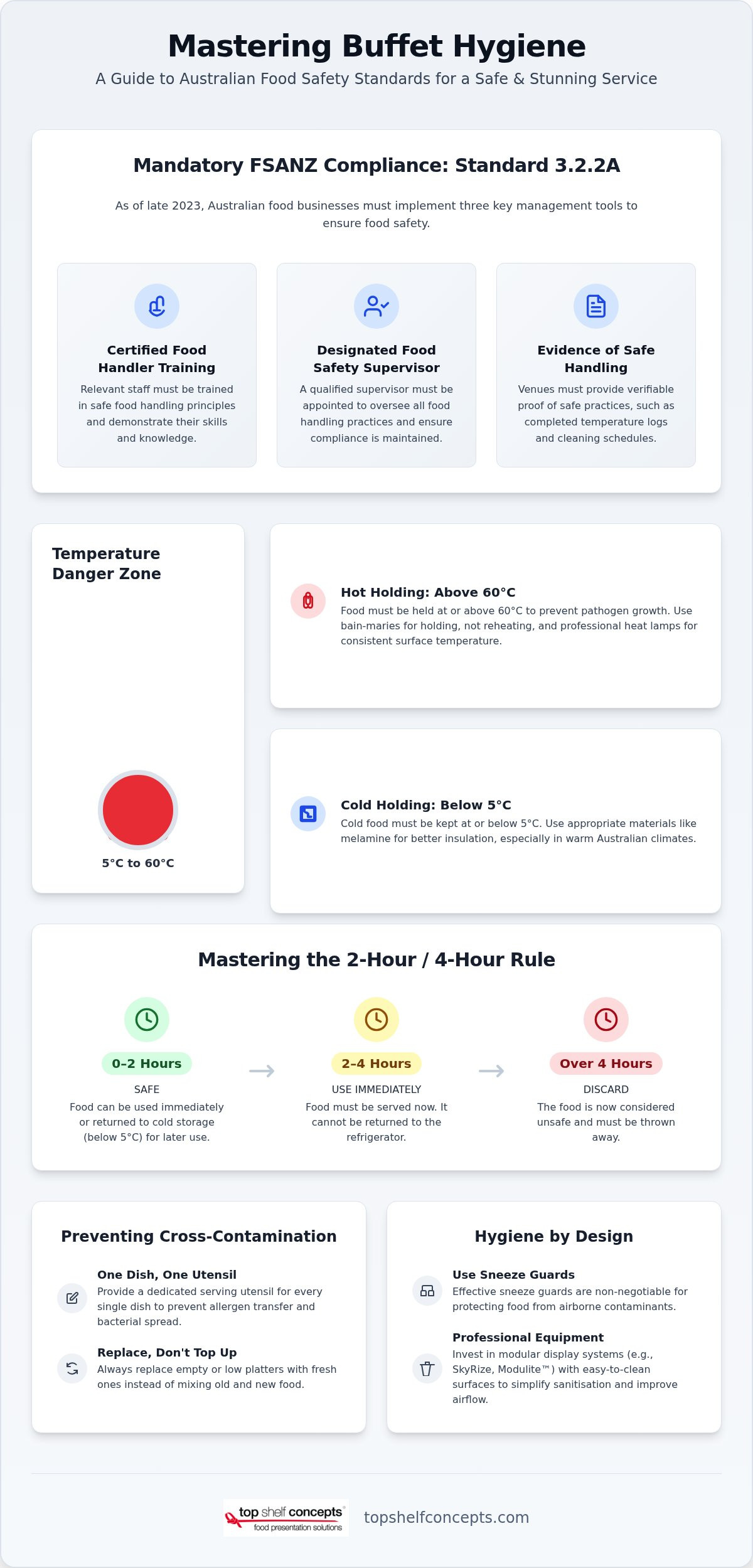
We promise to turn that anxiety into a professional advantage. This guide offers a comprehensive roadmap for navigating the latest FSANZ regulations, including the mandatory Standard 3.2.2A requirements that now define our industry. You'll learn how to implement a fail-safe hygiene protocol that doesn't sacrifice the theatre of your food presentation. From mastering the 2-hour/4-hour rule to utilising modular equipment like SkyRize risers for better airflow and separation, we're previewing the essential tools and tactics that keep your buffet stunning, safe, and profitable.
Key Takeaways
- Navigate the complexities of FSANZ regulations, including the mandatory Standard 3.2.2A, to achieve absolute compliance with food safety standards for buffets Australia.
- Master the 2-hour/4-hour rule to effectively manage the temperature danger zone and significantly reduce food waste during busy service periods.
- Implement rigorous "one dish, one utensil" protocols and frequent rotation schedules to prevent cross-contamination and allergen transfer.
- Discover how to integrate essential safety features like sneeze guards into a high-end buffet layout that prioritises both hygiene and guest flow.
- Learn how professional display hardware, such as SkyRize risers and Modulite™ tables, can simultaneously enhance your aesthetic and simplify your cleaning routines.
Understanding FSANZ Food Safety Standards for Australian Buffets
The Australia New Zealand Food Standards Code serves as the definitive authority for every hospitality professional. Managed by Food Standards Australia New Zealand (FSANZ), these regulations provide the legal framework for maintaining a safe and prestigious dining environment. For venue managers, the most critical components are Standard 3.2.2 and the more recent Standard 3.2.2A. While Standard 3.2.2 outlines general practices like hygiene and temperature control, Standard 3.2.2A introduces mandatory management tools that shifted the industry in late 2023. Australian buffets must now implement three specific tools: certified food handler training, a designated Food Safety Supervisor, and evidence of safe handling practices. This supervisor must have the authority to oversee handlers and intervene when standards slip, ensuring that food safety standards for buffets Australia are met every single shift.
The Legal Definition of Potentially Hazardous Foods
In a self-service environment, not all ingredients are created equal. Certain items, classified as potentially hazardous, require rigorous monitoring because they support the rapid growth of pathogenic bacteria. High-risk buffet staples include fresh seafood, poultry, dairy-based sauces, and even cooked rice. Adhering to Food safety principles means these items must never linger in the "danger zone" between 5°C and 60°C. Professional kitchens must use calibrated probes to verify internal temperatures at least every two hours. Documenting these checks is not just a best practice; it's a core legal requirement. If your records are incomplete during an inspection, the assumption is that the safety check never happened.
Local Council Inspections and Your Buffet
Local council health inspectors focus heavily on the physical layout and operational flow of your service. They look for specific "red flags," such as a lack of effective sneeze guards or the dangerous habit of "topping up" half-empty platters rather than replacing them entirely. A disorganised service area often signals a lack of control to an inspector. By investing in a high-end buffet display, you demonstrate a safety-first culture. Professional modular systems, such as those that utilise easy-to-clean porcelain and melamine, allow for rapid sanitisation and clear separation of food groups. This shows inspectors that your venue prioritises both elegance and public health. When your equipment is designed for hygiene, compliance becomes a seamless part of your daily routine.
The 2-Hour/4-Hour Rule: Mastering Temperature Control
Precision is the only way to navigate the complexities of the 2-hour/4-hour rule. It isn't just a guideline; it's a legal pillar of food safety standards for buffets Australia. The "Danger Zone", that precarious range between 5°C and 60°C, is where pathogens thrive. Your staff must understand that the clock starts the moment food leaves controlled storage. If a platter of chilled prawns sits out for 90 minutes, it can still go back into the cool room. However, once that clock hits the 121-minute mark, it's on a one-way trip to the guest's plate or the bin. Monitoring these intervals requires a disciplined culture of time-stamping and digital logging to ensure every bite is safe.
Hot Holding Standards for Australian Caterers
Hot holding requires a core temperature of 60°C or higher to remain compliant with food safety standards for buffets Australia. Chefs often rely on a bain-marie, but these units are designed to maintain heat, not create it. Reheating food in a holding unit is a common red flag for health inspectors. Instead, use induction or ovens to hit the target temperature before service begins. To maintain this heat from above, professional heat lamps are essential. They provide a consistent thermal blanket, ensuring the top layer of your roast or pasta doesn't drop into the danger zone while waiting for a guest. This dual-heating approach provides the reliability needed for high-volume service without sacrificing presentation.
Cold Display Hygiene in the Australian Summer
Chilling food in the Australian heat is a unique challenge. To stay within the Australian Food Safety Standards, cold items must be kept at 5°C or lower. Simply placing a bowl on ice isn't always enough, especially during outdoor events or in humid climates. The choice of service material is a strategic decision that impacts safety. In the debate of melamine vs porcelain, melamine often wins for cold displays due to its superior insulating properties. It doesn't transfer ambient heat as quickly as porcelain, keeping your seafood fresher for longer. Investing in the right buffet equipment allows you to maintain a fail-safe hygiene protocol while keeping your display visually stunning.
Preventing Cross-Contamination: Utensils and Service Protocols
Cross-contamination remains one of the most significant risks in a self-service environment. To maintain the highest food safety standards for buffets Australia, your venue must enforce a strict "One Dish, One Utensil" policy. This isn't merely about organisation; it's a critical defence against allergen transfer. When a guest uses the same spoon for honey-glazed carrots and steamed greens, they inadvertently put every diner with a honey allergy at risk. Beyond the rule itself, utensil design plays a vital role. Handles that are too short often slide into the food supply, contaminating the entire batch with whatever was on the guest's hands. To prevent this, choose utensils with integrated notches or ergonomic rests that keep the handle elevated and away from the product.
Staff must be trained to act as active stewards of the buffet line. They should monitor the station constantly, watching for "double-dipping" or guests who use personal cutlery to serve themselves. Implementing a frequent rotation schedule is non-negotiable for anyone serious about food safety standards for buffets Australia. Every 20 to 30 minutes, all serving utensils should be replaced with fresh, sanitised versions. This high-frequency swap prevents the buildup of bacteria at ambient temperatures and ensures the display always looks pristine. It's a simple, methodical rhythm that separates premium venues from those merely meeting the bare minimum.
Allergen Management in Self-Service Areas
Australian law requires clear identification of the nine major allergens: peanuts, tree nuts, milk, eggs, sesame, fish, shellfish, soy, and wheat. Effective management goes beyond simple labelling. Physical separation is key. Utilising tiered display risers allows you to elevate gluten-free or nut-free options, creating a vertical barrier that prevents accidental spills from above. Selecting the right commercial serving utensils with colour-coded or ergonomic grips further clarifies these boundaries for guests, making the safe choice the easy choice.
Staff Monitoring and Replenishment Protocols
The "never top up" rule is a cornerstone of professional buffet service. When a platter is low, staff must never simply add fresh food to the existing container. This mixes batches with different temperature histories and increases the risk of spoilage. Instead, the entire dish must be swapped for a fresh one in a clean vessel. This requires a seamless back-of-house flow where the kitchen is always two steps ahead of the floor. Simultaneously, high-touch points like beverage dispenser taps and cabinet handles must be sanitised regularly throughout the service period to break the chain of transmission between guests.
Buffet Layout and Hygiene: Sneeze Guards and Display Design
Legal compliance in the Australian hospitality sector isn't just about temperature; it's about physical protection. Breath guards, commonly known as sneeze guards, are a non-negotiable requirement under food safety standards for buffets Australia. They serve as a transparent barrier between the guest and the open food, preventing accidental contamination from breath, hair, or clothing. However, a poorly designed guard can obstruct the view of the culinary craft. The most effective designs balance crystal-clear visibility with maximum coverage, ensuring that the food remains the star of the show while staying entirely protected. Meeting the food safety standards for buffets Australia requires a layout that is as functional as it is beautiful.
Layout design should dictate guest movement. A chaotic buffet line where guests cross paths or backtrack increases the risk of spills and cross-contamination. By designing a deliberate one-way flow, you minimise congestion and ensure a more sanitary environment. Verticality also plays a protective role. Using tiered displays, such as SkyRize Display Risers, allows you to lift food away from the table surface. This reduces the chance of accidental contact and improves airflow around the platters. Selecting non-porous materials like high-grade melamine and stainless steel is equally vital. These surfaces don't harbour bacteria and can be wiped down instantly during service to maintain a pristine aesthetic.
Optimising Breath Guard Placement
Finding the sweet spot for breath guard height and angle is essential. If it's too high, it fails to protect. If it's too low, it hinders service. For venues that host various event types, portable sneeze guards offer the flexibility to reconfigure layouts without compromising on safety. These units must be positioned so that the leading edge of the guard sits between the guest's face and the food, creating a complete shield. Maintaining these guards is a constant task, as they must remain smudge-free to ensure guests don't feel the need to reach around them for a better look.
Modular Tables and Hygienic Footprints
Modern buffet design has moved away from the monolithic, single-line table. The Modulite™ system allows managers to create spaced-out stations that prevent dead zones where spills might accumulate out of sight. By separating the dessert station from the seafood bar, you reduce guest density in any single area. Always establish a clean zone at the start of the line for plates and cutlery. This ensures guests begin their journey with sterile equipment before reaching the food service zones. To elevate your venue's layout and ensure total compliance, explore our range of modular buffet solutions.
Professional Buffet Equipment: Where Safety Meets Style
The intersection of visual excellence and operational safety is where the most successful Australian venues distinguish themselves. Choosing the right hardware is a fundamental step in meeting the food safety standards for buffets Australia. Modern equipment doesn't just display food; it actively manages risk. SkyRize Display Risers, for instance, provide the verticality needed to separate high-risk food categories while facilitating superior airflow to maintain consistent temperatures across the display. Similarly, the Modulite™ table system offers a modular foundation that eliminates the hidden "dead zones" found in traditional setups. These stations are designed for rapid sanitisation, ensuring that your service area remains as hygienic as it is sophisticated.
Contamination risks often peak at high-touch points, particularly in self-service drink and bakery sections. Commercial beverage dispensers reduce the need for guests to handle shared jugs or bottles, providing a more controlled and sanitary experience. For ambient goods, bakery display cabinets and drawers offer a critical physical barrier against pests and dust. These units allow you to showcase artisanal breads and pastries without exposing them to the open environment. By integrating these professional solutions, you create a buffer between the guest and the product, ensuring every element of your service aligns with the strictest food safety standards for buffets Australia.
The ROI of High-Quality Safety Equipment
Investing in premium equipment isn't just a compliance cost; it's a strategic investment in your bottom line. Superior thermal management directly reduces food spoilage costs, as ingredients stay fresher for longer within their safe temperature windows. Modular systems like Modulite™ also lower labour costs. Their intuitive design allows staff to clean and reconfigure stations far faster than traditional heavy furniture. Perhaps most importantly, the right equipment protects your brand reputation. Avoiding a single foodborne illness incident is worth far more than the initial cost of high-end hardware. A safe buffet is a profitable buffet.
Selecting the Right Materials for 2026 Standards
Material science plays a quiet but vital role in buffet safety. Professional-grade melamine has become the industry standard for durability and thermal insulation. It's particularly effective for cold displays where maintaining a 5°C threshold is critical. In contrast, porcelain remains the preferred choice for premium, high-temperature heat lamp displays due to its classic aesthetic and heat-retention properties. When you are looking to sourcing hospitality supplies, it's essential to select products built for Australian compliance. Choosing non-porous, commercial-grade materials ensures your equipment can withstand the rigours of heavy-duty chemical sanitisation without degrading over time.
Elevating Your Venue Through Safety-First Design
Mastering the 2-hour/4-hour rule and implementing a strict utensil rotation policy are the foundations of a successful 2026 operation. These practices ensure your venue remains fully compliant with the latest food safety standards for buffets Australia, protecting both your guests and your hard-earned professional reputation. By integrating high-end modular displays and protective sneeze guards, you prove that rigorous hygiene doesn't have to compromise the beauty of your presentation. It's about creating a seamless experience where safety feels like a natural part of the luxury.
As Australia’s leading supplier of premium hospitality equipment, Top Shelf Concepts provides specialist modular systems designed specifically for commercial hygiene. We're trusted by top-tier Australian hotels and caterers to deliver excellence under the most demanding service conditions. Our hardware is engineered to make compliance intuitive, allowing your team to focus on the art of the display.
Explore the Top Shelf Concepts range of safety-first buffet equipment today to transform your service into a masterclass of style and safety. You've built a brand on quality; now ensure it's protected by the best hardware in the industry. Let's make your next service your safest and most stunning yet.
Frequently Asked Questions
Is it legal to reuse leftover food from a buffet in Australia?
No, it's generally illegal and unsafe to reuse food that has been displayed on a self-service buffet. Once food is presented for guest service, it's exposed to environmental contaminants and potential mishandling. Under the Australia New Zealand Food Standards Code, previously displayed food must be discarded. It should never be returned to the kitchen for future use or mixed with fresh batches. This is a non-negotiable rule for maintaining venue prestige.
What is the 2-hour/4-hour rule for buffet food safety?
The 2-hour/4-hour rule manages the time potentially hazardous food spends in the danger zone. If food is out for less than 2 hours, it can be refrigerated or used immediately. Between 2 and 4 hours, it must be used immediately; you can't return it to the fridge. After 4 hours, the food must be thrown out. Meticulous time-stamping is essential to ensure your venue remains compliant with food safety standards for buffets Australia.
Are sneeze guards legally required for all Australian buffets?
Yes, sneeze guards or breath guards are a legal requirement for all self-service food displays in Australia. Standard 3.2.2 requires food businesses to protect food from likely contamination. A physical barrier prevents respiratory droplets, hair, or dust from reaching the open product. These guards must be positioned between the guest's face and the food. High-end venues use crystal-clear glass or acrylic to maintain visibility without sacrificing the safety of the display.
What temperature should a hot buffet be kept at in Australia?
Hot food must be maintained at a core temperature of 60°C or higher. This ensures that pathogenic bacteria cannot multiply to dangerous levels. It's critical to use professional equipment like induction warmers or heat lamps to keep temperatures consistent across the entire platter. Staff should conduct regular probe tests every two hours and record the results in a temperature log to demonstrate full compliance with food safety standards for buffets Australia.
How often should serving utensils be changed during a buffet service?
Serving utensils should be changed at least every 20 to 30 minutes during active service. This high-frequency rotation prevents the buildup of food residues and bacteria on handles that are touched by dozens of guests. If a utensil falls into the food or is used across different dishes, it must be replaced immediately. Using ergonomic, notched utensils prevents handles from sliding into the food, which simplifies your hygiene protocols during busy periods.
Can I serve raw seafood on a self-service buffet?
You can serve raw seafood, such as oysters or sashimi, but it requires extreme temperature control. These items must be kept at or below 5°C at all times. Professional setups often use ice-wells or chilled melamine bases to maintain this thermal threshold. Because raw seafood is a high-risk category, it should be displayed in smaller batches and replaced frequently to ensure it stays fresh and safe for every guest during the event.
What are the penalties for breaching food safety standards in Australia?
Penalties for breaching food safety laws vary by state but can be severe for commercial venues. Local councils can issue on-the-spot fines, improvement notices, or prohibition orders that force a business to close until issues are rectified. In serious cases, businesses may be named on "naming and shaming" registers. Beyond the legal fines, the damage to a venue's reputation and the loss of guest trust are often the most significant long-term costs.
How should I label allergens on a commercial buffet display?
Allergens must be clearly and accurately labelled at the point of service. You must identify the nine major Australian allergens, including peanuts, milk, and gluten, on individual dish cards or a clearly visible menu board. Using tiered risers to physically separate allergen-free items is a sophisticated way to prevent accidental cross-contamination. Ensure your staff are fully trained to answer specific guest enquiries about ingredients and preparation methods to maintain a safe environment.

