



Commercial Glassware Australia: The 2026 Professional Selection Guide

Did you know that a single piece of quality drinkware can generate over 1,300 brand impressions throughout its lifespan? It's a staggering figure that highlights why your choice of commercial glassware Australia is far more than a utility purchase. You likely already recognise that the weight and clarity of a glass dictate a guest's perception of quality, yet the constant cycle of breakage and etched, cloudy surfaces remains a persistent drain on your bottom line. Inconsistent supply chains only add to the frustration, leaving your tabletop looking mismatched and unprofessional when replacement stock isn't available.
This professional guide promises to help you break that cycle by selecting high-performance vessels that enhance both your venue branding and your operational ROI. We'll explore how to achieve a curated, sophisticated tabletop look while significantly reducing replacement costs through superior material durability. From the resurgence of vintage-inspired coupes to the technical requirements of the 2026 hospitality market, you'll discover how to secure a consistent supply of glassware that elevates the sensory experience of every drink you serve. We'll preview the latest shifts in lead-free crystalline technology and provide the technical benchmarks needed to ensure your investment withstands at least 1,000 industrial wash cycles without losing its prestige.
Key Takeaways
- Understand how the tactile "weight-in-hand" of your glassware directly influences guest perception and reinforces your venue's unique brand identity.
- Learn to navigate the technical differences between toughened glass and crystalline to secure high-performance commercial glassware Australia that resists thermal shock and industrial wear.
- Identify the essential 2026 silhouettes, from minimalist fine dining stems to retro-inspired coupes, that align your tabletop with contemporary aesthetic trends.
- Implement professional maintenance protocols, including the "no-stack" rule, to prevent etching and extend the operational lifespan of your investment.
- Discover how to integrate your glassware selection with broader buffet and beverage service solutions to create a cohesive and highly profitable guest experience.
The Role of Premium Commercial Glassware in Australian Hospitality Branding
In the competitive landscape of the Australian hospitality sector, every touchpoint is an opportunity to reinforce your venue's identity. Selecting high-quality commercial glassware Australia is no longer a mere procurement task; it's a strategic branding decision. When a guest lifts a glass, they immediately register its weight-in-hand. This tactile feedback acts as a silent indicator of value. A substantial, heavy-based tumbler suggests a grounded, premium experience, while a fine, lightweight stemware piece signals elegance and exclusivity. By choosing vessels that feel purposeful, you communicate a standard of excellence before the first sip is even taken.
Aligning these silhouettes with your interior design is vital for a cohesive atmosphere. A minimalist venue with industrial finishes demands sleek, angular lines and unadorned surfaces. Conversely, a heritage-listed bar or a boutique hotel might benefit from the intricate textures of retro-inspired vessels. This transition from functional service to sensory branding allows operators to justify higher price points. A craft cocktail served in a bespoke, crystal-clear vessel isn't just a drink. It's a premium experience that guests recognise as superior, allowing your beverage program to command the margins it deserves.
Sensory Experience: Beyond the Visuals
The physical properties of your glass directly impact the guest's palate. Rim thickness is a critical factor that many overlooked. A laser-cut, ultra-thin rim allows the beverage to flow smoothly onto the tongue, enhancing the tasting notes of fine wines and delicate spirits. For those looking to diversify their bar program, consulting a comprehensive guide to glassware types can clarify which shapes best suit specific beverage profiles. Beyond the rim, clarity is paramount. High-performance crystalline ensures that the vibrant colours of a cocktail or the delicate effervescence of champagne are displayed without distortion. Even the acoustic quality matters. The crisp, resonant clink of premium glass during a toast provides a sensory cue of quality that standard soda-lime glass simply cannot replicate.
Glassware as a Component of Presentation Excellence
Achieving a truly sophisticated tabletop requires a holistic approach to design. Your glassware shouldn't exist in isolation. It must complement your choice of crockery, particularly when coordinating glassware with melamine vs porcelain dinnerware. This synergy creates a seamless transition from the bar to the buffet table. When every element, from the weight of the cutlery to the brilliance of the glass, reflects a consistent standard, you reinforce your brand’s commitment to quality. This attention to detail transforms a simple meal into a curated event, ensuring your venue remains the preferred choice for discerning patrons who value the art of presentation.
Material Excellence: Navigating Crystal, Toughened Glass, and Polycarbonate
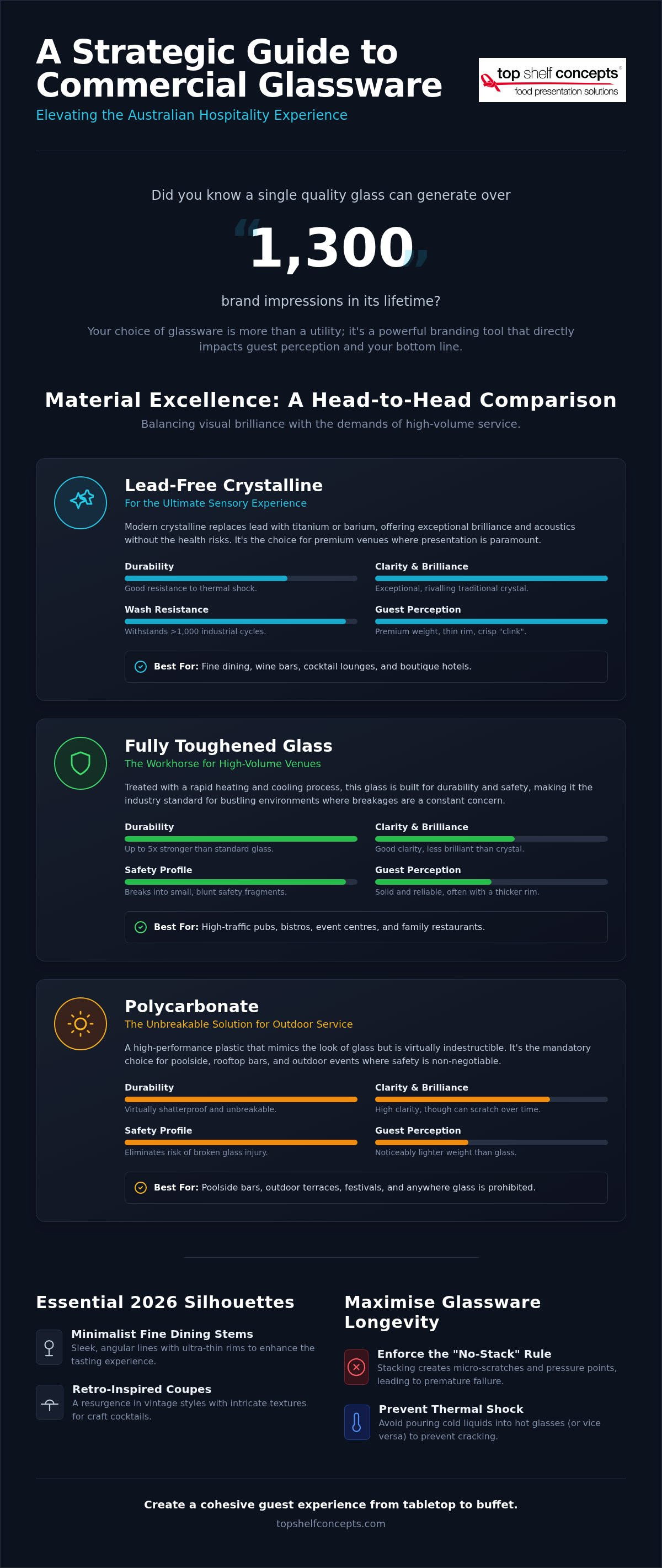
Selecting the right material for commercial glassware Australia requires a sophisticated balance between visual brilliance and the harsh realities of high-volume service. Fully toughened glass remains the gold standard for high-traffic environments. This material undergoes a rapid heating and cooling process that creates internal tension, making the glass up to five times stronger than standard alternatives. When it does fail, it breaks into small, blunt fragments rather than sharp shards, significantly reducing workplace hazards. For bistros and bars that prioritise longevity but want a finer feel, rim-tempering offers a strategic middle ground. By strengthening only the most vulnerable part of the glass, manufacturers maintain a slender profile while protecting against the chips that typically occur during frantic service hours.
While traditional lead crystal was once the hallmark of luxury, the industry has shifted toward lead-free crystalline. This modern material replaces lead with barium or titanium, offering the same refractive index and "ping" without the health risks or the susceptibility to clouding in industrial washers. It provides the clarity required for premium wine service while meeting the rigorous demands of Australian food contact material regulations. For outdoor venues, poolsides, or high-risk late-night settings, high-grade polycarbonate is an essential solution. Modern polycarbonate vessels mimic the weight and clarity of real glass so effectively that guests often can't tell the difference until they touch the rim.
Durability Standards for the Australian Market
Operational efficiency hinges on the longevity of your stock. High-quality commercial glass should be certified to withstand at least 1,000 industrial dishwasher cycles without showing signs of etching. Identifying stress points, such as the join between the bowl and the stem or the curvature of the base, helps managers select shapes that are less prone to mechanical failure. Thermal shock resistance is the capacity of a glass material to withstand rapid temperature fluctuations during industrial dishwashing cycles without cracking or shattering. Ensuring your equipment meets these standards reduces the frequency of replacement orders and keeps your overheads predictable.
Aesthetics vs. Longevity: Finding the Sweet Spot
Fine-blown glass is seeing a resurgence in premium Australian bars as operators seek to distinguish their service through "quiet luxury." While these pieces require more careful handling, their impact on the drinking experience is undeniable. For beer service, nucleated glassware is a functional innovation that uses laser-etched patterns at the base to maintain carbonation and head retention. This technical detail ensures the beer stays "alive" for longer, enhancing the sensory experience for the patron. To find the perfect equilibrium between these delicate aesthetics and industrial-grade performance, you can explore the curated range of glassware at Top Shelf Concepts, where every piece is selected for its ability to thrive in a professional environment.
The 2026 Roundup: Essential Glassware Collections for Every Service Style
In 2026, the curation of commercial glassware Australia has evolved beyond simple utility into a nuanced expression of venue identity. Fine dining establishments now favour minimalist, ultra-fine stems that almost disappear, allowing the beverage's colour and clarity to take centre stage. These are often paired with ultra-clear crystalline carafes that provide a sophisticated architectural element to the table. Cocktail bars, conversely, are embracing a sense of nostalgia. We see a significant return to retro-inspired coupes and heavy-base tumblers designed specifically for "Old Fashioned" service, where the physical weight of the glass matches the gravity of the spirit.
Boutique hotels require a different strategy, prioritising versatile hi-balls that transition seamlessly from fresh juices at breakfast to premium spirits in the evening lounge. This versatility reduces the total SKU count without compromising the guest experience. For high-volume catering and buffet environments, the focus shifts toward durable jugs and stacking glasses. These pieces must be rugged enough to handle frequent transport and rapid turnover while remaining space-efficient in tight storage areas.
Curating the Perfect Wine Service
The choice between universal and varietal-specific glassware is a defining factor for your wine program. Australian guests increasingly expect a bowl shape that respects the wine's specific profile. While a universal glass offers operational simplicity, providing a specific bowl for a bold Shiraz or a crisp Riesling elevates the perceived value of your cellar list. We are also seeing the rise of stemless glassware in casual premium dining. These vessels provide a modern, relaxed aesthetic while significantly reducing the risk of tipping and mechanical breakage. Table-side decanting remains a powerful service ritual; using high-clarity decanters doesn't just aerate the wine, it signals a deep commitment to presentation excellence.
Glassware for High-Volume Beverage Service
Operational efficiency shouldn't come at the cost of style. When selecting vessels for self-service areas, it's vital to choose shapes that complement your commercial drink dispensers. A cohesive visual link between the dispenser and the glass creates a professional, intentional display that encourages guest engagement. Modern stackable designs have also undergone a transformation. New versions feature subtle internal ridges that prevent sticking and vacuum seals while maintaining a refined silhouette. Regardless of your service volume, all equipment must be maintained according to Australian food safety standards to ensure every vessel is correctly sanitised. High-volume water and soft drink service benefit most from tall, slender hi-balls that maximise visual volume while occupying a minimal footprint on the tabletop.
Operational Efficiency: Care, Maintenance, and Maximising Glassware Longevity
Protecting your investment in commercial glassware Australia requires more than just high-quality procurement. It demands a rigorous maintenance protocol that safeguards the clarity and structural integrity of every piece. Etching and cloudiness are often the result of poor washing practices rather than material failure. To maintain "Presentation Excellence," you must ensure that your chemical dosage is precise and your water temperature is consistent. Over time, caustic detergents and hard water minerals can degrade the surface of the glass, turning a premium vessel into a dull, unprofessional item. Regular descaling of your glasswasher is essential to prevent these mineral deposits from bonding to your stock.
Managing inventory through "Glassware Par Levels" is equally critical. A well-calculated par level ensures your team isn't rushing the washing process during peak service periods, which is when most breakages occur. Ideally, you should maintain three times your maximum seating capacity: one set in service, one in the wash, and one ready for the next rotation. This buffer allows for natural cooling and reduces the pressure on staff to handle hot, fragile items. For fine dining environments, finishing is the final step. Using microfibre cloths and a light application of steam ensures a streak-free, brilliant finish that reflects the high standards of your beverage program.
Preventing Chemical and Mechanical Damage
Water hardness and detergent pH levels have a profound impact on long-term glass clarity. High-alkaline detergents can strip the surface of the glass, leading to permanent "white clouding" that no amount of polishing can fix. Using specialised glass racks that isolate each piece is non-negotiable for high-volume venues. Investing in specialised glass racks provides a significant ROI by virtually eliminating the mechanical shock and surface scratching caused by glasses vibrating against each other during the high-pressure wash cycle. These racks also ensure optimal water flow and drainage, which reduces the need for manual drying and further limits handling risks.
Staff Training for Breakage Reduction
Staff training is the frontline of breakage prevention. Implementing a "No-Stack" rule is the simplest way to reduce mechanical shock; when glasses are stacked, the pressure on the rims and the friction between surfaces cause micro-fractures that eventually lead to failure. Safe handling of high-end crystal requires specific techniques, such as holding the glass by the base or the bowl rather than the delicate stem. This simple change in habit can extend the life of your stemware by months.
Temperature acclimatisation is another vital step that is often overlooked in busy kitchens. Taking a cold glass and plunging it into a 60-degree wash cycle creates intense thermal stress. Encourage staff to allow glassware to reach room temperature before cleaning. To track performance, implement a "broken glass" log to identify if specific service areas or shift patterns are seeing higher loss rates. This data allows for targeted training rather than general reprimands. To ensure your venue is equipped with the most durable and aesthetically superior vessels, browse the professional glassware range at Top Shelf Concepts.
Elevating Your Tabletop with Top Shelf Concepts
Top Shelf Concepts has established itself as the premier source for commercial glassware Australia by refusing to compromise on either form or function. We recognise that in the premium hospitality sector, your equipment must do more than just perform; it must inspire. Our commitment to "Presentation Excellence" drives us to curate collections that serve as the final, polished detail in your venue's design. We don't just supply vessels. We provide a partnership in the creative process, ensuring that every glass you place on a table reinforces a narrative of quality and prestige. This focus on the intersection of aesthetic brilliance and industrial durability ensures your investment delivers a high ROI through reduced breakage and enhanced guest satisfaction.
A sophisticated guest experience is rarely built on a single element. It's the result of a cohesive ecosystem of service equipment. Our glassware range is designed to integrate seamlessly with our broader offerings, such as our industry-leading solutions for mastering buffet display. Whether you're coordinating the crystalline clarity of a wine glass with porcelain plates or matching durable hi-balls with commercial cereal dispensers at a breakfast station, we provide a unified aesthetic. This total-solution approach eliminates the visual clutter of mismatched equipment, allowing your brand’s personality to shine through with "quiet luxury."
Why Australia’s Leading Venues Choose Top Shelf
Operating a national hospitality group or a high-end boutique venue requires a supplier that understands the specific rigours of the Australian market. We provide expert advice tailored to your operational needs, helping you navigate the technical nuances of material selection and maintenance protocols discussed earlier in this guide. Our national support network ensures that whether you're in Sydney, Perth, or a regional catering hub, you receive consistent, professional service. We've streamlined our ordering and delivery processes to support large-scale rollouts and urgent replacement needs alike. This reliability makes us the trusted advisor for chefs and event planners who cannot afford supply chain inconsistencies during their busiest periods.
Ready to Elevate Your Service?
The 2026 hospitality landscape demands a higher standard of presentation than ever before. If your current tabletop feels uninspired or your replacement costs are impacting your bottom line, it's time to refine your selection. Our latest collections offer the perfect balance of trend-setting design and high-performance durability. Our team is ready to provide personalised consultations to help you find the specific silhouettes that will distinguish your brand in a competitive market. Don't settle for utility when you can achieve excellence. Enquire about our curated glassware range today and discover how the right choice of vessel can transform your beverage service into a hallmark of your venue’s success.
Defining Your Venue’s Future through Presentation Excellence
Selecting the right vessels for your beverage program is a strategic investment in your brand’s longevity. Throughout this guide, we've explored how the physical weight and sensory clarity of your glass dictate guest perceived value, allowing you to command premium price points. By prioritising material excellence, such as fully toughened glass and lead-free crystalline, you protect your bottom line from the high breakage rates that often plague busy Australian kitchens. Implementing rigorous maintenance protocols and maintaining healthy par levels further ensures that your tabletop remains a consistent hallmark of quality.
Finding the perfect equilibrium between "quiet luxury" and industrial-grade performance is essential when sourcing commercial glassware Australia. As the nation’s leading hospitality presentation experts, Top Shelf Concepts is dedicated to supplying premium venues nationwide with equipment curated for both durability and aesthetic excellence. Our team is ready to help you define your venue's signature look through professional curation and reliable national support. Explore the Top Shelf Concepts 2026 Glassware Collection and take the first step toward transforming your service into a truly memorable guest experience. We look forward to partnering with you in your creative presentation journey.
Frequently Asked Questions
What is the difference between tempered and annealed glassware for commercial use?
Tempered glass undergoes a thermal treatment that makes it significantly stronger than annealed, or "standard," glass. While annealed glass is suitable for low-impact residential settings, commercial glassware Australia requires the durability of tempered materials. If a tempered glass breaks, it shatters into small, blunt cubes rather than dangerous shards, which is a vital safety feature for busy hospitality environments.
How can I prevent my commercial glassware from becoming cloudy in the dishwasher?
Cloudiness is usually caused by either mineral deposits from hard water or chemical etching from high-alkaline detergents. You can prevent this by installing a water softener and ensuring your detergent pH is correctly balanced for your specific machine. Regular descaling of the dishwasher and using a high-quality rinse aid will help maintain the brilliant clarity of your stock over hundreds of cycles.
Is lead-free crystal durable enough for a busy Australian restaurant?
Modern lead-free crystalline is specifically engineered for the rigours of professional service. By replacing lead with titanium or barium, manufacturers create a material that retains the brilliance and resonant "ping" of crystal while offering superior resistance to industrial dishwashing. It's a high-performance choice that provides a premium sensory experience without the fragility associated with traditional lead crystal.
What glassware "par level" should I maintain for a 100-seat venue?
For a 100-seat venue, you should ideally stock 300 glasses of each primary type to maintain a 3:1 par ratio. This ensures you have 100 glasses in active service, 100 in the washing cycle, and 100 cooling or ready for the next rotation. This buffer prevents staff from handling hot glasses straight from the machine, which is a leading cause of thermal shock breakage.
Can I use the same glasses for both wine and cocktails to save space?
While universal or stemless glasses can serve multiple roles, using specialized vessels is a key component of sensory branding. A cocktail served in a dedicated coupe or heavy-base tumbler justifies a higher price point than one served in a standard wine glass. If space is at a premium, select versatile silhouettes that still align with the sophisticated aesthetic of your beverage program.
How does nucleated glassware work for beer service?
Nucleated glasses feature laser-etched patterns at the base that act as points for carbon dioxide to gather and release. This process creates a steady stream of bubbles that maintains the beer's head and aromatic profile throughout the drink. It's a functional detail that ensures your draught beer looks as fresh as it tastes, enhancing the guest's visual and sensory experience.
What are the benefits of stackable glassware for catering businesses?
Stackable designs offer significant space efficiency and safety during transport for catering operations. Modern professional ranges include subtle internal ridges that prevent the glasses from sticking together or creating a vacuum seal when stacked. This design feature protects the rims from chipping and makes setup and pack-down much faster for event staff, reducing overall handling risks.
Which glass shape is best for a high-volume breakfast buffet service?
A tall, slender hi-ball or a refined stackable tumbler is the most efficient choice for a busy breakfast buffet. These shapes maximise the visual volume of juices and water while occupying a minimal footprint on the tabletop or buffet station. Choosing a shape that is easy for guests to grip and stable enough to resist tipping ensures a smooth, professional service during peak morning periods.

