



Melamine vs Porcelain: 2026 Commercial Crockery Guide

What if the most expensive item in your venue isn't your curated wine list, but the constant stream of shattered porcelain headed for the bin? For many Australian hospitality leaders, the hidden cost of breakages is a persistent drain on the bottom line that often goes unaddressed. Choosing between melamine vs porcelain dinnerware for commercial use isn't just a matter of style; it's a strategic decision that impacts everything from your replacement budget to the physical fatigue of your floor staff.
You shouldn't have to sacrifice a prestigious aesthetic just to survive the rigours of a high-volume service. This 2026 guide explores how to balance durability with visual impact to ensure your tabletop presentation remains flawless. We'll provide a clear framework for selecting materials based on your specific service type, helping you achieve a superior ROI while ensuring your guests are consistently wowed by your presentation.
Key Takeaways
- Recognise the financial impact of the 5:1 durability ratio when comparing melamine vs porcelain dinnerware for commercial use in high-traffic environments.
- Understand the 70°C rule and other critical safety limits to ensure your tableware remains food-safe and structurally sound during service.
- Determine the ideal material for your specific service model, balancing the prestige of vitrified porcelain with the resilience of modern melamine.
- Learn how to calculate the total cost of ownership to move beyond initial purchase prices and improve your venue's long-term ROI.
- Discover how quiet luxury designs allow you to maintain an upscale aesthetic while benefiting from the ergonomic advantages of lightweight materials.
Understanding Commercial Tableware: Porcelain and Melamine Basics
Selecting the foundation of your tabletop presentation is a strategic investment that dictates your venue's operational flow and financial health. While both materials serve the hospitality industry, the choice between melamine vs porcelain dinnerware for commercial use carries significant implications for your annual budget. Retail-grade options often fail within weeks of professional use because they lack the structural density required to withstand high-temperature commercial dishwashers and the constant physical impact of a busy service. Professional-grade materials are engineered to endure these rigours while maintaining their visual integrity.
The distinction lies in the manufacturing process and the intended environment. Porcelain offers a traditional, upscale feel that resonates with fine dining expectations, whereas melamine provides an incredibly resilient solution for high-traffic zones where breakages are a constant risk. Understanding the technical properties of each material allows you to curate a collection that enhances your food presentation without causing unnecessary replacement costs.
The Anatomy of Professional Porcelain
Vitrification is the defining characteristic of high-quality porcelain plates and bowls. During firing at temperatures exceeding 1,200°C, the ceramic particles fuse into a dense, glass-like state. This process makes the material completely non-porous, preventing the absorption of moisture, food odours, or bacteria. It's a critical factor for hygiene and longevity in any professional kitchen.
Beyond hygiene, porcelain is prized for its superior heat retention. It keeps main courses at the correct temperature from the pass to the guest's table, ensuring the chef's vision is preserved. The sensory experience also remains unmatched; the specific weight and the resonant "clink" of cutlery against a vitrified surface signal prestige and quality to your diners. This makes it the essential choice for venues focused on "quiet luxury" and traditional elegance.
The Evolution of Modern Melamine
Modern melamine has moved far beyond its origins as a basic utility material. Today's premium melamine is a hard-wearing, BPA-free plastic resin that has undergone a sophisticated aesthetic transformation. Advanced manufacturing techniques now allow for textures and finishes that closely mimic stone, wood, and even reactive-glaze ceramics. This evolution has effectively closed the aesthetic gap, allowing venues to benefit from incredible shatter resistance without compromising on style.
Safety and ergonomics are the primary drivers for melamine's popularity in specific service formats. It's significantly lighter than porcelain, which reduces staff fatigue during long shifts and minimises the risk of workplace injuries. Because it doesn't shatter into dangerous shards, it's the gold standard for outdoor dining, poolside service, and high-volume buffet environments. When you choose high-quality resin, you're investing in chemical stability and a material that stays cool to the touch, even when holding hot food, providing an extra layer of safety for both staff and guests.
Durability, Ergonomics, and the Replacement Rate Reality
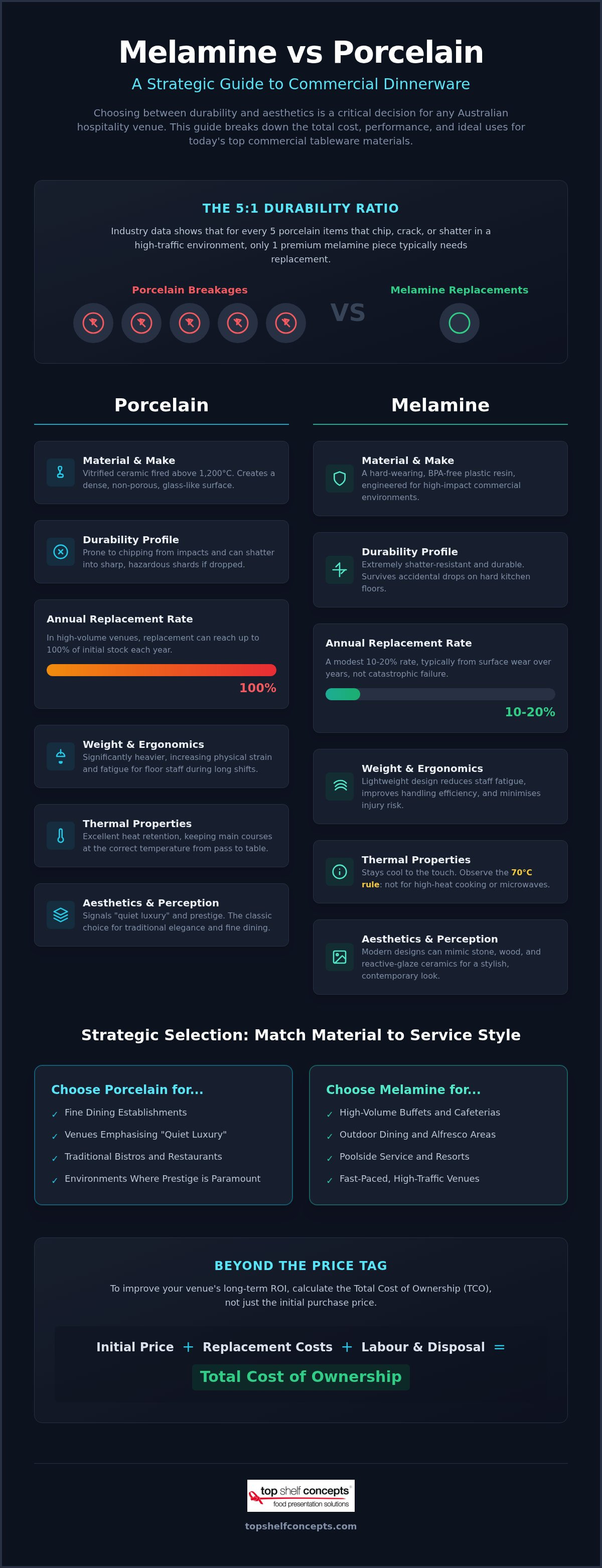
The financial health of a venue often hides in the rubbish bin. While porcelain offers a classic feel, the 'shatter factor' in high-traffic environments creates a constant, expensive cycle of replacement. When evaluating melamine vs porcelain dinnerware for commercial use, the most revealing metric is the 5:1 durability ratio. This industry benchmark suggests that for every five porcelain items that succumb to chips or cracks, a single piece of premium melamine typically remains in service. It's a fundamental shift in how we calculate value.
Total Cost of Ownership (TCO) extends far beyond the initial invoice price. It includes the labour spent sweeping up shards, the cost of disposing of hazardous waste, and the lost revenue from table turn delays. High-quality melamine platters drastically reduce breakage costs by providing a shatterproof surface that survives accidental drops on hard kitchen floors. This resilience ensures that your presentation remains consistent even during the most frantic shifts.
Replacement Rates: A Data-Driven Comparison
In a bustling Australian bistro or high-volume buffet, porcelain replacement rates can reach 100% of the initial stock annually. This isn't just bad luck; it's the reality of a fast-paced environment where speed often compromises handling. Melamine, by contrast, usually sees a modest 10-20% replacement rate. Wear typically occurs through gradual surface dulling or minor staining over several years rather than immediate catastrophic failure. This predictability allows managers to budget with precision rather than reacting to the latest kitchen mishap.
Staff Safety and Handling Efficiency
The physical demand on floor staff is a critical, yet often overlooked, factor in tableware selection. Melamine is typically 50-70% lighter than its porcelain counterparts. This weight reduction is transformative during a long service. A waiter carrying a tray of eight main courses experiences significantly less joint strain when the plates themselves are feather-light. Staff fatigue is real, and reducing the physical load is a proactive step toward better workplace safety.
This ergonomic advantage leads to faster clearing speeds and reduced fatigue-related accidents during peak periods. There is also a distinct acoustic benefit. Melamine dampens the sharp, metallic clatter often heard in open-plan dining rooms, contributing to a more controlled and pleasant guest atmosphere. If you're looking to optimise your service flow while protecting your team, exploring our premium tabletop collections is an excellent starting point for your next upgrade.
Food Safety and Commercial Performance: The Critical Limits
Understanding the thermal and chemical boundaries of your tableware is vital for maintaining food safety and protecting your long-term investment. When comparing melamine vs porcelain dinnerware for commercial use, the most significant performance gap involves thermal management. Porcelain excels in environments where food is finished in the oven or kept under high-intensity heat lamps. Melamine serves as a high-performance solution for cold displays, ambient temperature service, and moderate heat applications where its specific safety limits are respected.
Temperature Tolerance and Microwave Use
Porcelain remains the undisputed choice for oven-to-table service. Its vitrified structure handles extreme temperature shifts without compromising its structural integrity. Melamine operates under a different set of rules, specifically the 70°C rule. Exposing melamine to temperatures above this threshold for extended periods can lead to crazing, which refers to small surface cracks that harbour bacteria. This exposure may also trigger the migration of resin components into food. For this reason, melamine should never be used in microwaves or conventional ovens.
It's perfectly suited for buffets where food is kept at safe serving temperatures, but it isn't a tool for the cooking process itself. If your service involves chilled seafood displays or room-temperature deli presentations, melamine is an ideal partner. It doesn't conduct heat as quickly as ceramic, meaning it won't sweat or transfer ambient warmth to your chilled offerings as rapidly as other materials might.
Hygiene and Dishwasher Durability
Both materials offer excellent hygiene profiles due to their non-porous surfaces. Bacteria don't have a place to hide on a well-maintained vitrified plate or a high-quality resin platter. However, their behaviour in a commercial dishwasher differs significantly. Porcelain retains heat, which helps it flash-dry quickly once the cycle ends. Melamine cools rapidly and often requires a slightly longer drying period or the use of a specialised rinse aid to prevent water spotting.
While premium melamine is highly resistant to the harsh chemicals found in commercial sanitisers, it's more susceptible to surface scratching over time. Maintaining the gloss finish requires specific care:
- Avoid abrasive scouring pads: These can create micro-scratches that dull the surface and attract stains.
- Limit serrated knife use: Constant heavy cutting on melamine surfaces will eventually lead to visible wear.
- Skip the bleach: Harsh bleach-based cleaners can strip the protective resin layer and cause premature yellowing.
Stain resistance is another area where porcelain typically leads. Its glass-like glaze is impervious to the pigments in turmeric, beetroot, and coffee. While premium melamine is engineered for high stain resistance, prolonged exposure to high-acid foods or dark pigments can cause subtle discolouration if the items aren't rinsed promptly after service. For high-volume coffee service or curry-heavy menus, porcelain remains the standard for long-term aesthetic perfection.
Strategic Selection: Matching Material to Your Service Style
Deciding between melamine vs porcelain dinnerware for commercial use requires a deep understanding of your venue's specific service theatre. While we have established the technical differences in durability and heat management, the final choice often hinges on guest expectations. In a high-end fine dining environment, the sensory experience of a vitrified surface remains the industry benchmark. Conversely, for large-scale operations and outdoor spaces, the safety and efficiency of premium resin are indispensable.
Elevating the Buffet Experience
Modern buffet presentation relies on visual texture and verticality. By pairing melamine platters with SkyRize display risers, you can create a multi-level landscape that captures interest and organises food types effectively. This approach is particularly effective for chilled seafood or ambient pastry displays where the lightweight nature of melamine allows for rapid replenishment. Integrating these pieces into a Modulite™ table system ensures a seamless, professional aesthetic that feels permanent rather than improvised. To explore how these elements can work together, you can view our professional buffet display solutions online.
The Aesthetic Impact on Guest Perception
Guest perception is shaped by the interplay of material and plating. While porcelain plates signal a sense of tradition and prestige, modern melamine allows for organic shapes and stone-like finishes that align with contemporary "quiet luxury" trends. Custom branding irons can also be used to mark wooden boards or accessories, adding a signature touch to your tabletop. Whether you're designing for a formal gala or a casual rooftop bar, the material must support the culinary story you're telling, ensuring every "Instagrammable" moment is backed by professional-grade quality. This level of curation often extends to iconic furniture choices, where pieces like the TH Brown Danish Bar Stool help define a venue's commitment to timeless Australian design.
The Top Shelf Solution: Premium Tabletop Curation
Navigating the nuances of melamine vs porcelain dinnerware for commercial use requires more than just a catalogue; it demands a partner who understands the high-stakes environment of a professional kitchen. At Top Shelf Concepts, we don't just provide equipment. We curate collections that balance the pragmatic need for durability with the creative desire for aesthetic excellence. Our national supply network ensures that venues across Australia have access to the world's leading presentation brands, backed by local expertise. Whether you are outfitting a flagship fine-dining venue in Melbourne or a high-volume coastal resort, our range provides the structural integrity required to protect your ROI while maintaining a sophisticated tabletop presence.
Our focus on "quiet luxury" ensures that even your most resilient pieces maintain a premium feel. We offer melamine that mirrors the depth, texture, and weight of high-end ceramic, allowing you to benefit from shatterproof performance without compromising the guest experience. This commitment to quality extends beyond the plate to our comprehensive display solutions. By integrating Modulite™ table systems with SkyRize risers, you can build a cohesive, multi-dimensional presentation that works across both porcelain and melamine formats, ensuring your buffet or tabletop is always the centre of attention.
Why Hospitality Leaders Choose Top Shelf
With decades of expertise serving the Australian hospitality landscape, we understand that a successful service is built on reliability. We bridge the gap between back-of-house efficiency and front-of-house prestige, ensuring every item we stock can survive the rigours of a commercial dishwasher. Our approach defines the delivery of comprehensive presentation solutions that empower chefs to innovate, moving beyond the simple role of a traditional equipment supplier. This philosophy ensures that every piece in your inventory serves a dual purpose: operational resilience and sensory impact. To complement these presentation solutions, many venues also utilise professional artistic tools from PoscART to create bespoke menu boards and signage that reflect their unique brand personality.
Streamlining Your Procurement
Managing a venue is complex enough without juggling multiple vendors for your tabletop needs. Top Shelf Concepts offers a streamlined, one-stop sourcing experience for everything from vitrified porcelain and designer melamine to precision cutlery and beverage dispensers. We provide the expert advice needed to build a cohesive identity across your entire venue, ensuring your buffet displays, main course service, and outdoor dining areas all speak the same language of quality. Our team works closely with you to select pieces that complement your existing Modulite™ systems or SkyRize displays, creating a unified aesthetic that wows every guest.
If you're ready to elevate your venue's presentation and optimise your long-term costs, explore our premium tabletop collection today and discover the difference that expert curation makes to your bottom line.
Future-Proofing Your Tabletop Presentation
Your choice of crockery is a direct reflection of your venue’s standards and a significant driver of operational efficiency. We've explored how the durability of premium melamine can protect your budget in high-traffic zones, while vitrified porcelain remains the gold standard for heat retention and prestige. Mastering the distinction between melamine vs porcelain dinnerware for commercial use allows you to curate a service that is both visually stunning and financially sustainable. It's about finding the perfect equilibrium between the sensory "clink" of ceramic and the ergonomic safety of modern resin.
As Australia’s leading hospitality supplier, Top Shelf Concepts specialises in high-end buffet and tabletop presentation for national hotel chains and boutique venues alike. Our curated collections ensure your presentation remains flawless while reducing the physical strain on your staff and the financial drain of frequent breakages. We're here to help you make these choices with confidence and precision. Take the next step in refining your guest experience today.
Upgrade your venue with Top Shelf Concepts’ premium tabletop range and transform your food presentation into a competitive advantage.
Frequently Asked Questions
Is melamine dinnerware safe for hot food in a restaurant?
Yes, melamine is perfectly safe for serving hot food, provided the material remains below the 70°C threshold for extended periods. It's an excellent choice for keeping soups and main courses at an enjoyable temperature without the plate itself becoming too hot for staff to handle. However, it should never be used to cook food in an oven or under high-intensity heat lamps.
Can commercial melamine plates go in the microwave?
No, you should never place melamine in a microwave oven. The material absorbs microwave radiation, which can lead to rapid overheating, surface bubbling, and eventual cracking. This process compromises the structural integrity of the resin and may lead to chemical migration. For any tasks requiring a microwave, stick to vitrified porcelain or heat-safe glass to ensure food safety.
Why is porcelain more expensive than melamine in the long run?
The total cost of ownership for porcelain is often higher due to the inevitable frequency of breakages in a busy kitchen. When comparing melamine vs porcelain dinnerware for commercial use, the shatterproof nature of melamine means you'll replace it significantly less often. While porcelain offers a prestigious feel, the cumulative cost of replacing chipped or shattered ceramic pieces can quickly outpace the initial investment in durable resin alternatives.
How do I prevent my melamine platters from staining?
Prompt rinsing after service is the most effective way to prevent stains from high-pigment foods like turmeric, beetroot, or dark coffee. You should avoid using bleach or harsh abrasive scouring pads, as these strip the protective gloss layer and make the material more susceptible to absorption. If staining does occur, use a specialised oxygen-based soaking agent designed specifically for commercial resin products to restore the finish.
What is vitrified porcelain and why is it better for hospitality?
Vitrified porcelain is a ceramic that has been fired at extremely high temperatures until it becomes glass-like and non-porous. This process is essential for hospitality because it ensures the plate won't absorb moisture, food particles, or bacteria, making it incredibly hygienic. It also provides the superior strength and chip resistance needed to survive the constant cycles of a commercial dishwasher without losing its elegant finish.
Can I mix melamine and porcelain on the same buffet table?
Absolutely, and many modern Australian venues do this to create a layered, sophisticated aesthetic. By using porcelain for individual serves and melamine for larger shared platters, you gain the benefits of both materials. This material mix is often favoured by premium event specialists like Casa Catering Sydney when managing high-end yacht charters or corporate functions. Utilising modular systems like SkyRize risers helps to unify these different textures, ensuring your buffet presentation looks intentional, professionally curated, and visually dynamic for your guests.
How long should a commercial melamine plate last before needing replacement?
A high-quality melamine plate can last several years in a commercial environment if handled correctly. You'll know it's time for a replacement when the surface loses its original lustre, becomes visibly scratched, or begins to show persistent staining that affects the presentation. Regularly auditing your stock ensures that your tabletop presentation always meets the high standards your guests expect and your brand demands.
Does melamine scratch easily in a commercial dishwasher?
Melamine is highly resistant to the chemicals and heat of a commercial dishwasher, but it can be scratched by improper stacking or abrasive cleaning tools. Scratches usually occur when plates are forced into racks or rubbed against metal utensils during the wash cycle. Training staff on correct loading techniques is the best way to maintain the smooth, polished finish of your resin tableware over hundreds of cycles.

