



The Professional Guide to Eco-Friendly Catering Packaging in 2026

Does your current catering presentation sacrifice your brand's prestige the moment a guest picks up a compostable plate? For many hospitality leaders, the shift toward sustainability has felt like a compromise, often resulting in eco-friendly catering packaging that looks rustic or wilts under the heat of a professional kitchen. You likely agree that while meeting environmental targets is essential, your food deserves a vessel that reflects its quality rather than detracting from it. Choosing the right materials is an opportunity to redefine your venue's commitment to excellence through the lens of quiet luxury.
This guide promises to show you how to align your sustainability goals with high-end presentation standards using BioLITE and other sophisticated solutions. We'll explore the latest 2026 Australian single-use plastic ban updates, including the specific labelling requirements in South Australia and Victoria's expanded regulations. You'll learn how to distinguish between AS 4736 and AS 5810 certifications to ensure your strategy is both compliant and durable. From moisture-resistant materials to custom branding, we'll provide a clear roadmap for creating a cohesive, eco-conscious display that honours your culinary craft.
Key Takeaways
- Confidently navigate the complexities of national and state-specific plastic regulations to protect your venue from compliance risks and ensure long-term operational stability.
- Identify the performance benchmarks that separate professional-grade eco-friendly catering packaging from inferior, rustic alternatives that compromise food quality and presentation.
- Optimise your kitchen workflow by selecting thermally stable packaging that maintains its aesthetic appeal even when held under high-intensity commercial heat lamps.
- Elevate your visual storytelling by integrating custom-branded elements with your sustainable disposables to create a cohesive and premium guest experience.
- Master the art of the display by choosing versatile shapes and sizes that enhance the architectural interest and sophistication of your buffet or canape service.
The Evolution of Eco-Friendly Catering Packaging in Australia
The Australian hospitality landscape has undergone a radical transformation. Not long ago, sustainable service meant compromise; venues often settled for "brown and rustic" textures that felt more like a local market than a five-star dining room. In 2026, the standard has shifted. Sophistication and sustainability are no longer mutually exclusive. Modern eco-friendly catering packaging must now serve as a seamless extension of a venue's brand, matching the precision of the kitchen with the elegance of the plate.
True eco-consciousness extends far beyond being merely biodegradable. It involves a deep understanding of Sustainable packaging principles, where the entire lifecycle of a product is considered. As of 2026, the Australian regulatory environment has become increasingly stringent. Victoria expanded its single-use plastic ban on January 1 to include items integrated into food packaging; meanwhile, South Australia introduced mandatory labelling requirements on March 1. In this climate, simply being "compostable" is the baseline. Aesthetic excellence is now the true differentiator for premium venues.
The Problem with Traditional Plastic Disposables
Relying on traditional plastics presents significant operational and reputational risks. Australians generate approximately 2.5 million tonnes of plastic waste annually, and guest demand for ethical service is at an all-time high. Beyond the environmental impact, there is a jarring visual disconnect when premium, artisan ingredients are served in cheap plastic containers. This mismatch can devalue your culinary craft. As state-based bans tighten, procurement becomes a minefield for those who haven't yet secured a high-end, compliant alternative.
Meeting Guest Expectations for Sustainable Luxury
Sustainable luxury is about building brand loyalty through shared values. Your packaging is often the final touchpoint of the guest experience, particularly in takeaway or off-site catering formats. It acts as a secondary storefront. A premium Sydney venue recently demonstrated this by transitioning to 100% compostable service for their gala events. By replacing flimsy plastics with structured, high-performance materials, they maintained their prestige while meeting the Victorian Government's goal of reducing plastic pollution by 80% by 2030. This shift ensures every canape and cocktail remains a statement of quality and environmental stewardship.
BioLITE vs. Traditional Natural Materials: A Comparison
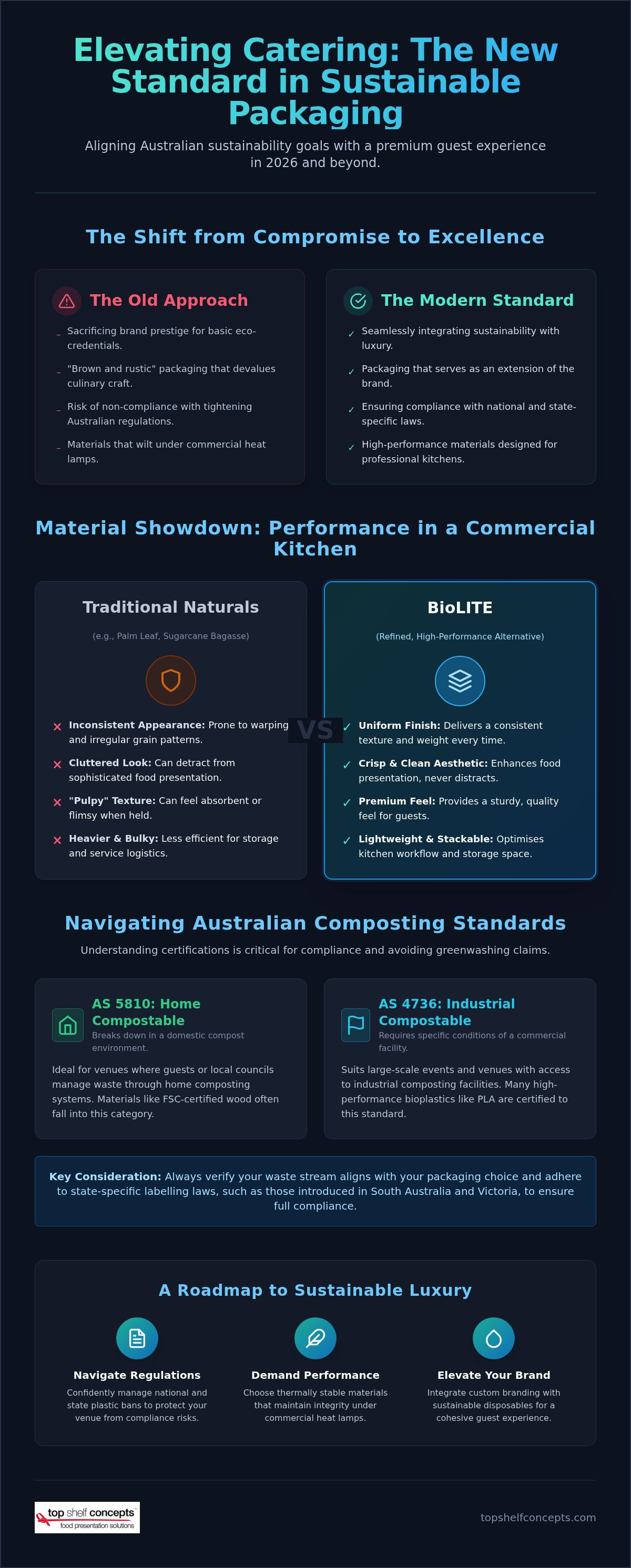
While palm leaf and sugarcane bagasse are often marketed as the "natural" choice, they frequently fall short in high-pressure commercial environments. Palm leaf is prone to irregular warping and unpredictable grain patterns that can look cluttered on a formal tray. For a professional chef, consistency is paramount. BioLITE canape dishes offer a refined alternative that delivers a uniform texture and weight, ensuring every plate leaving the pass looks identical. This level of precision is what defines premium eco-friendly catering packaging in 2026.
Large-scale events demand efficiency without sacrificing style. BioLITE's lightweight, stackable design reduces storage footprints and simplifies service logistics. Unlike heavier sugarcane options that can feel "pulpy" or absorbent when held, BioLITE provides a crisp, clean aesthetic that doesn't distract from the food. When you calculate the cost-to-value ratio, the reduction in breakage and the elevation of the guest experience make it a superior investment for venues looking to distinguish themselves.
Material Properties and Composting Standards
Composting standards in Australia are rigorous and specific. You must distinguish between AS 4736 (industrial) and AS 5810 (home) certifications to ensure your venue remains compliant. Many bioplastics like PLA are ideal for cold-service catering, providing the clarity of traditional plastic without the environmental footprint. However, it's vital to ensure your waste stream aligns with these materials. If your local area lacks industrial facilities, home-compostable options or FSC-certified wood might be more appropriate for your sustainability goals. Checking the specific labelling requirements in your state, such as those introduced in South Australia this year, is essential for avoiding greenwashing claims.
Aesthetic Versatility for Different Event Styles
Achieving a cohesive look requires a balanced toolkit. There's still a place for the rustic charm of eco-friendly wood or bamboo skewers, especially when paired with a custom branding iron to sear your logo onto the pick. However, BioLITE’s neutral palette acts as a sophisticated canvas for vibrant, modern canapes. To further elevate the presentation, you might consider how premium catering trays can provide the structural foundation for these delicate dishes. Integrating custom food-safe paper adds another layer of branded sophistication while protecting the dish. This combination of materials allows you to curate a display that's both ethically responsible and visually stunning, ensuring your venue stays ahead of the curve in a competitive market.
Performance Standards: Durability and Service Reliability
Performance is the silent partner of presentation. While a dish may look stunning on the pass, its true test occurs in the hands of a guest navigating a crowded cocktail event. High-grade eco-friendly catering packaging must provide a tactile rigidity that reassures the diner. If a plate flexes or feels flimsy, it devalues the culinary experience. BioLITE canape dishes are engineered to offer this essential "hand-feel," providing a sturdy foundation that mimics the weight and reliability of traditional ceramic without the operational burden of washing and breakage.
Moisture resistance is equally critical for service reliability. Lower-quality pulp products often suffer from "soggy bottom" syndrome, where dressings, sauces, or oils compromise the structural integrity of the vessel within minutes. Premium alternatives are designed to resist liquid ingress, ensuring that a vinaigrette-heavy salad or a sauced protein remains secure throughout the duration of a function. By investing in premium eco-friendly catering packaging, you eliminate the risk of embarrassing collapses and messy spills, maintaining the high standards your venue is known for.
Heat Management in Professional Service
In a fast-paced kitchen, food often needs to be held at temperature before service. This is where many sustainable materials fail. While some options wilt or warp, BioLITE and high-performance sugarcane variants are designed to withstand the intensity of commercial heat lamps without losing their shape. Thermal resistance in bioplastics is defined as the material’s ability to withstand elevated temperatures without compromising its structural integrity or leaching chemicals into the food. Choosing materials with high thermal stability ensures that hot canapes reach the guest exactly as the chef intended, even during long-duration service windows.
Logistics and Event Efficiency
Off-site catering presents unique logistical challenges that demand smart packaging solutions. Modularity and stackability are non-negotiable features for efficient transport. Space-saving designs allow your team to pack more units into transit boxes, reducing the number of trips and lowering the risk of damage on the road. When you arrive at a remote venue, the ease of unboxing and setup can significantly impact your labour costs. Utilising sturdy catering trays as a structural foundation for your disposables further enhances service efficiency, allowing waitstaff to move through high-volume crowds with confidence and speed. This methodical approach to logistics ensures that your commitment to sustainability never comes at the cost of operational excellence.
Curating the Display: Selecting the Right Shapes and Sizes
Design is the differentiator. In the world of premium hospitality, the geometry of your service vessels communicates as much to the guest as the ingredients themselves. Teardrop shapes suggest movement and elegance, perfect for a delicate ceviche, while crisp squares lend a modern, architectural feel to structured terrines. Selecting the right eco-friendly catering packaging isn't just about utility; it's about psychological impact. A perfectly sized vessel makes a single amuse-bouche feel like a curated event rather than a mere snack. It frames the food, focusing the guest's attention on the texture and colour of the dish.
When planning a buffet display, variety in height and shape is essential for maintaining visual engagement. You can use BioLITE canape dishes to create multi-level interest, moving beyond the flat, monotonous trays of the past. These vessels aren't limited to savoury bites; their clean lines and neutral tones make them an exceptional choice for deconstructed desserts or miniature fruit parfaits. This allows the vibrant colours of the food to take centre stage, ensuring your display looks as fresh and innovative as the menu itself.
Takeaway High Tea and BentoStyle Trends
The shift toward premium off-site experiences has birthed new formats for the Australian market. Leading hotels are now utilising the Take Away High Tea Stand to offer a five-star experience in a portable, eco-conscious format. Similarly, corporate clients are demanding more than a standard sandwich platter. Designing a premium BentoStyle packaging solution involves using dividers and custom inserts to protect delicate presentations during transit. This structured approach ensures that the unboxing experience mirrors the luxury of on-site dining, protecting your brand's reputation long after the food leaves the kitchen.
Accessorising for Impact
The final flourishes define your venue’s identity. Pairing your eco-friendly catering packaging with custom branding irons allows you to sear your logo directly onto eco-friendly wood or bamboo picks and skewers. This creates a signature touch that guests remember and often share on social media. Even your choice of napkins should be treated as a design element rather than a utility. By selecting high-quality, sustainable textiles that match your venue's colour palette, you reinforce the message that every detail has been meticulously considered. This cohesive strategy transforms a simple meal into a sophisticated brand statement.
Explore our full range of BioLITE canape dishes to find the perfect match for your next event.
The Top Shelf Approach: Integrating Brand and Sustainability
At Top Shelf Concepts, we don't just stock products; we curate systems that empower hospitality leaders to excel. Choosing eco-friendly catering packaging shouldn't feel like a compromise on your venue’s identity. Our role is to act as a sophisticated partner, providing the tools that allow your culinary vision to shine while meeting the environmental expectations of the modern guest. This curated approach ensures that every element, from the texture of a canape dish to the weight of a catering tray, works in harmony to deliver a premium experience.
Transitioning your venue toward a more sustainable future starts with a methodical audit of your current service. Analyse your existing packaging waste to identify where traditional plastics are still utilised, particularly in high-volume takeaway or off-site scenarios. By pinpointing these areas, you can strategically replace them with high-performance alternatives like BioLITE or BentoStyle solutions. This structured transition allows you to maintain operational efficiency while demonstrably reducing your environmental footprint, ensuring you stay ahead of Australian regulatory changes.
Custom Branding for a Competitive Edge
Branding is what transforms a generic disposable into a signature service element. Utilising custom food-safe paper provides an immediate layer of sophistication, elevating the perception of even the simplest eco-materials. It acts as a canvas for your venue's story, allowing you to maintain brand visibility without the need for bulky, non-sustainable plastics. Custom branding irons allow you to permanently etch your venue's identity onto eco-friendly wood or bamboo skewers, creating a bespoke signature on every bite. This minimalist yet impactful approach ensures that your commitment to the environment doesn't come at the cost of your brand's prestige.
Your Partner in Premium Presentation
Accessing a comprehensive range of BioLITE and BentoStyle solutions is the final step in refining your service strategy. We offer national delivery and expert advice tailored specifically to the Australian hospitality landscape, helping you navigate the complexities of modern catering logistics. Whether you are planning a large-scale corporate event or an intimate high tea service, our team is here to ensure you have the right tools for the job. Requesting samples is a practical way to experience the quality and "hand-feel" of our range before committing to a full-scale rollout.
Ready to elevate your venue's presentation? Explore the full BioLITE canape range and discover the future of sustainable service.
Defining the Future of Sustainable Service
Success in the modern Australian hospitality sector requires a proactive approach to regulatory compliance and an unwavering commitment to aesthetic excellence. By moving beyond rustic, unreliable materials and embracing high-performance eco-friendly catering packaging, you ensure your venue meets both environmental standards and the high expectations of your guests. BioLITE has established itself as the gold standard in this space, offering the structural integrity needed for professional service without sacrificing the quiet luxury your brand represents.
As Australia’s leading supplier of premium buffet equipment, Top Shelf Concepts provides the expert national support required to transition your service with confidence. Our curated range is designed to help you navigate the complexities of 2026 plastic bans while maintaining a sophisticated, branded presentation. Your commitment to sustainability is a powerful investment in your venue's reputation and longevity. Elevate your service with the BioLITE canape range and lead the way in sustainable luxury.
Frequently Asked Questions
Are BioLITE canape dishes commercially compostable in Australia?
Yes, BioLITE canape dishes are designed to meet Australian commercial composting standards, specifically AS 4736. This certification ensures that the material biodegrades by at least 90% within 180 days in an industrial facility. Choosing certified eco-friendly catering packaging protects your venue from greenwashing claims and ensures compliance with South Australia’s 2026 labelling requirements. Always verify that your local council has the infrastructure to process these industrially compostable materials.
Can eco-friendly catering packaging handle hot food without losing its shape?
High-performance options like BioLITE and premium sugarcane bagasse are specifically engineered for thermal stability. These materials maintain their structural integrity under commercial heat lamps and won't wilt when holding hot, sauced canapes. Unlike lower-grade pulp alternatives, professional-grade eco-friendly catering packaging prevents the "soggy bottom" syndrome. This reliability is essential for maintaining a premium presentation during long-duration cocktail parties or corporate buffet services where food must remain at temperature.
How does BioLITE compare to palm leaf plates for high-end events?
BioLITE offers a level of consistency and "quiet luxury" that palm leaf often lacks. While palm leaf provides a rustic, irregular aesthetic, BioLITE delivers clean lines and a uniform texture across every piece. This uniformity is vital for high-end events where precision is a brand requirement. Additionally, BioLITE is lighter and more stackable, making it a more efficient choice for large-scale logistics compared to the bulkier, heavier palm leaf alternatives.
What is the best eco-friendly packaging for a takeaway high tea service?
The most sophisticated solution for off-site service is the Take Away High Tea Stand or a premium BentoStyle box. These formats allow you to maintain five-star presentation standards while ensuring the food is protected during transit. Using structured dividers and custom inserts prevents delicate pastries from shifting. This approach transforms a standard takeaway order into a curated experience, allowing your venue to extend its prestige beyond the dining room floors.
Can I customise my eco-friendly packaging with my venue’s logo?
Yes, customisation is a core feature of the Top Shelf Concepts range. You can use custom food-safe paper to wrap items or line trays, providing an immediate layer of branded sophistication. For a more tactile signature, custom branding irons allow you to sear your logo directly onto eco-friendly wood or bamboo picks and skewers. This creates a memorable, social-media-friendly touchpoint that reinforces your venue’s identity without relying on non-sustainable plastics.
Is bioplastic (PLA) better than sugarcane bagasse for cold canapes?
Bioplastic (PLA) is often the superior choice for cold service because it provides the crystal-clear visibility of traditional plastic. It is ideal for showcasing the vibrant colours of a chilled seafood cocktail or a layered dessert. However, PLA has a lower melting point and shouldn't be used for hot food. Sugarcane bagasse is better suited for warm applications. Selecting the right material based on the dish's temperature ensures both performance and guest satisfaction.
Do eco-friendly picks and skewers comply with current Australian plastic bans?
Yes, skewers and picks made from natural materials like bamboo or wood are fully compliant with Australian state-based single-use plastic bans. These materials are exempt from the restrictions placed on plastic stirrers and cutlery. By choosing high-quality wood or bamboo, you avoid the compliance risks associated with integrated plastic items, such as those banned in Victoria as of January 1, 2026. They remain a staple for elegant, compliant canape service.
What is the shelf life of compostable catering packaging in a commercial kitchen?
Compostable packaging has an almost indefinite shelf life when stored correctly in a cool, dry environment. These materials are designed to break down under specific conditions, such as the high heat and microbial activity found in a compost bin. They won't degrade on your kitchen shelves or during standard service. To ensure maximum longevity, keep your stock in its original packaging and away from direct moisture or extreme humidity until it's ready for use.

